Dept. Laser Materials Processing of JWRI
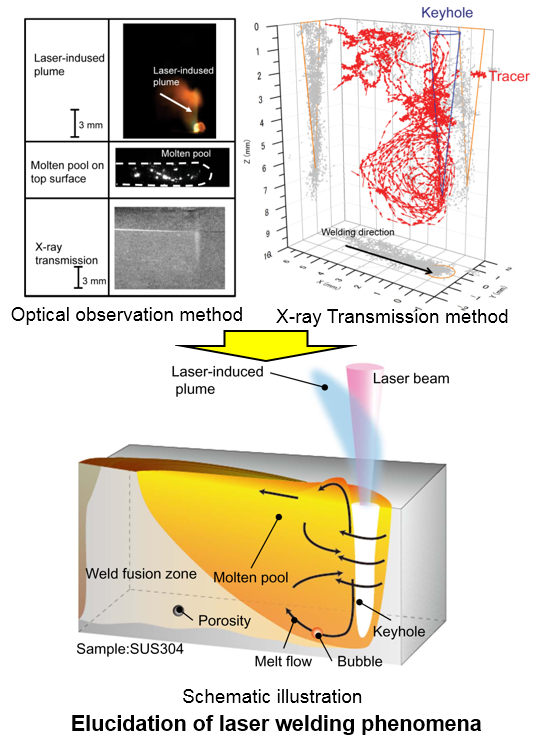

Fundamental studies are performed concerning the development of joining, surface modification and removal processing with a laser beam. In particular, the mechanisms of joining and imperfection formation are clarified by the high-speed observation and measurement of laser and/or arc welding phenomena with optical sensors or X-ray transmission imaging techniques. Further studies of monitoring, adaptive control and simulation of processing are undertaken on metallic, ceramic or plastic materials to obtain a basic knowledge in producing high quality welds at all times. Moreover, researches are made of laser brazing, laser-arc hybrid welding, underwater laser welding or repairing, and laser joining of dissimilar materials such as different metals or metal and plastic.
- Laser weldability of various materials.
- Development of high-quality, high-performance, highprecision and high-efficiency laser welding process.
- Elucidation of laser welding phenomena and imperfection formation mechanisms, and development of remedies.
- Laser joining of dissimilar materials (Laser-assisted metal-plastic joining)
- Development of monitoring and adaptive control in laser welding.
- Fundamental studies of materials processing utilizing laser.


Metals and plastics have been widely used in industrial applications such as automobiles, aircrafts and electronic devices. Joining of a metal and a plastic is necessary and important from a manufacturing viewpoint.We have newly developed an innovative laser direct rapid joining process of metal and plastic lap plates without adhesives or glues. The joints made between Type 304 stainless steel plate and polyethylene terephthalate (PET) plastic sheet of 30-mm width possessed the tensile shear loads of about 3,000 N. The transmission electron microscope (TEM) photos of the joint demonstrated that Type 304 and the PET were bonded on the atomic, molecular or nanostructural level through the chromium (Cr)-oxide film.

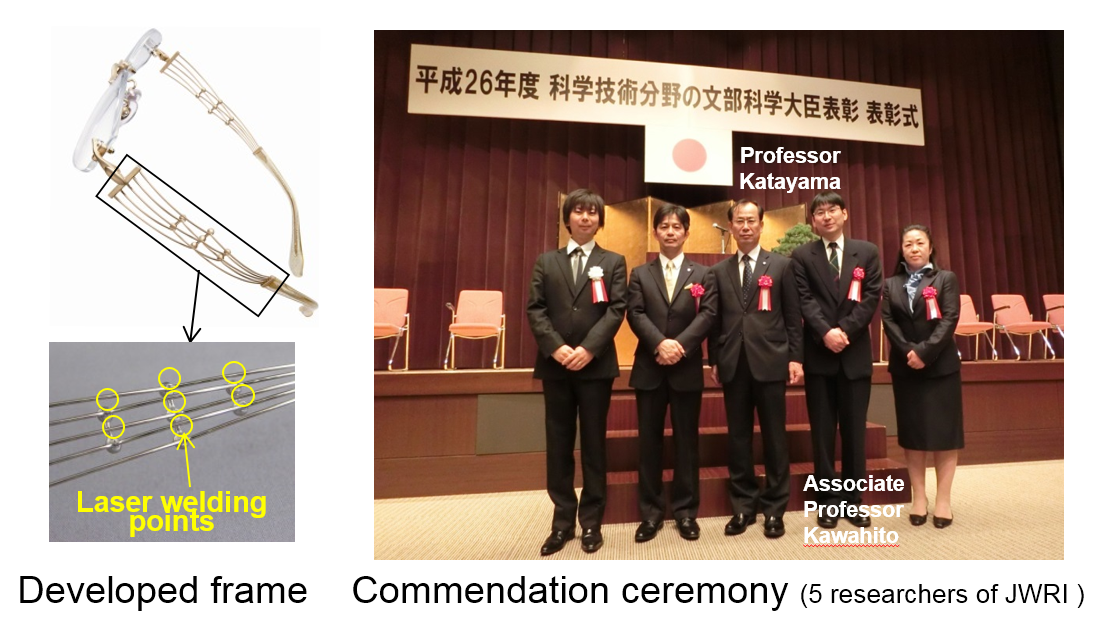
We were awarded a science and technology prize for development of micro-precision laser welding which revitalizes production area of eye glasses frame. This welding technology creates added value including new feel of a chair and were applied for medical devices.